They were fined under Part 2 of the Article 22.9 of
the Administrative Code - each of them was fined 35 basic units (6
million 300 thousand rubles), NGO Belarusian Association of Journalists
reports.
The penalty has been imposed under an administrative protocol drawn
up by the chief of department of law enforcement and prevention of
Rahachou police department, Lieutenant Colonel Yury Astapovich.
Natallia Kryvashey and Kanstantsin Zhukouski were accused of "illicit
production" of the reportage "Bitter flavor of the crisis. Why Rahachou
condensed milk remains in the warehouses?" which was broadcast on
Belsat on May 14.
"There is nothing to be expected from the courts other than fines.
The country is in crisis. Both intelligence services and the police
together with the courts have found a relatively easy way to replenish
the budget - through community activists and journalists, freelancers,"
commented on the decision of the court Natallia Kryvashey.
For her, this year it has been the fourth court on similar
administrative cases, Kanstantsin Zhukouski was tried for the seventh
time.
In total, in Belarus this year, the courts have fined freelance
journalist under the Article 22.9 of the Administrative Code 24 times.
The amount of fines exceeded 129 million rubles. belsat.eu/en/, baj.by
From 1994 to 1997, Dmitry Zavadsky
worked as a personal operator of Mr Lukashenka. Later, he started
working for the Russian television.
He vanished
on the morning of 7 July 2,000 on the way to the national airport
Minsk-2, where he went to meet his colleague Pavel Sharamet. Mr
Zavadsky's car was found in the airport, but it is still unknown what
happened to him. The body of Dzmitry still has not been found. At that time he was 27 years old.
Officially, the journalist disappearance case was fully investigated.
According to the investigators, the journalist was kidnapped by former
employees of the Interior Ministry Special Forces Unit Almaz, Valer
Ihnatovich and Maxim Malik, as well as a former student of the Interior
Academy Alyaksai Guz and Syarhei Savushkin, who has repeatedly been on
trial before that. Mr Ihnatovich and Mr Malik were sentenced to life imprisonment.
According to Pavel Sheremet, the reason for the abduction could have
been the work of Mr Zavadsky in Chechnya in 1999-2000, during the
filming of The Chechen Diary. Mr Zavadsky could gather information about
the actions of the Belarusian special forces, who at that time were in
Chechnya.
The widow of the journalist, Svyatlana, created a foundation in his
name, and in 2001, colleagues of the operator Dzmitry Zavadsky founded a
prize For Courage and Professionalism. belsat.eu/en/
NYDALEN (VG) Stikk i strid med
rådene velger norske stortingsrepresentanter å ha omgang med
etterretningsoffiserer under diplomatisk dekke, sier Politiets
sikkerhetstjeneste.
JAKTER
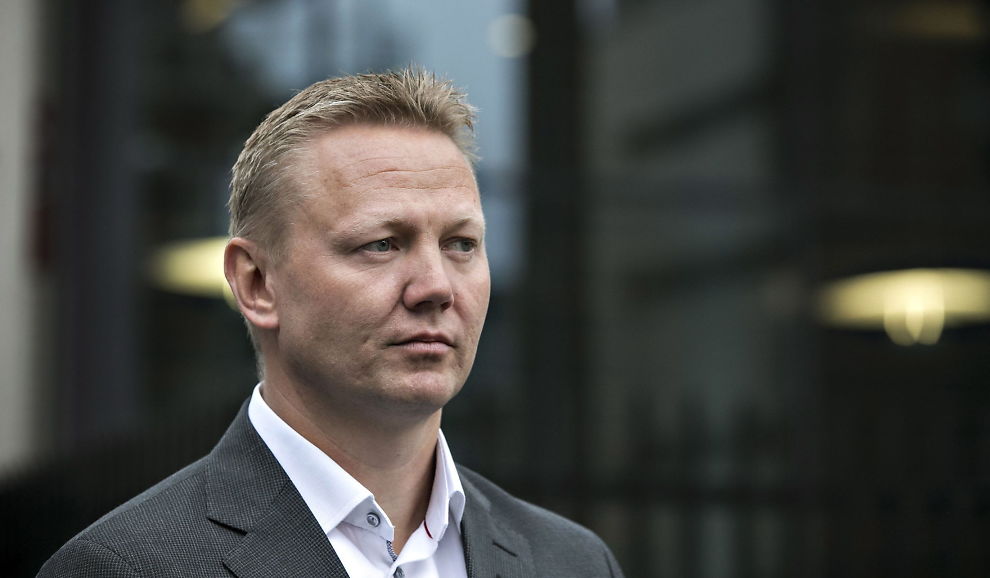
UTENLANDSK ETTERRETNING: Seksjonsleder Arne Christian Haugstøyl ved
Forebyggende avdeling i Politiets sikkerhetstjeneste (PST).
Foto: Jan Petter Lynau, VG
I dette intervjuet med VG forteller
seksjonsleder Arne Christian Haugstøyl ved Forebyggende avdeling i
Politiets sikkerhetstjeneste (PST) åpent om omfanget av utenlandske
etterretningsoperasjoner. – Den russiske ambassaden har et
ganske formidabelt antall etterretningsoffiserer under diplomatisk
dekke. Både fra SVR, GRU og FSB. – Hvor mange er det som er her under diplomatisk dekke?
–
Jeg har ikke mulighet til å gi noe antall på det. Men jeg kan si at
flere av de ambassadene for land som Norge ikke har et
sikkerhetssamarbeid med, vi har nevnt Kina og Russland i vår
trusselvurdering, har flere etterretningsoffiserer under diplomatisk
dekke stasjonert ved ambassadene, sier Haugstøyl. Les hovedsaken: PST bekymret for Frp-stortingsrepresentant - advart mot for nær kontakt
Han
leder arbeidet i PST med å gi råd og drive forebyggende arbeid for å
begrense utbyttet av etterretningsvirksomhet mot norske myndigheter og
politikere. Har du informasjon om denne saken eller lignende saker? Kontakt VGs reportere her
I dokumentet «Åpen trusselvurdering 2015», som ble publisert 4. februar i år, skriver PST blant annet:
«De
to statene som Norge ikke har et sikkerhetspolitisk samarbeid med, og
som samtidig har den desidert største etterretningskapasiteten, er
Russland og Kina. Av disse vurderer vi russisk etterretning til å ha det
største skadepotensialet for norske interesser. Den alvorligste
etterretningsvirksomheten vil i 2015 rettes mot Norges evne til å
beskytte landet og politiske beslutningsprosesser». RUSSLANDS AMBASSADE: På Drammensveien 74 i Oslo ligger ambassaden til Russland.
Foto: Frode Hansen, VG
Politikere trosser PSTs råd
VG skriver i dag om stortingsrepresentanten Tor André Johnsens (Frp) omgang og kontakt med russisk personell og politikere.
PST
vil ikke kommentere saken om Johnsen spesielt, men uttaler seg på
generelt grunnlag om hvordan norske stortingspolitikere omgås utenlandsk
etterretningsfolk.
I PST omtales slik relasjonsbygging som
«kultivering». Med det begrepet mener PST at etterretningspersonell
forsøker å bygge vennskapslignende relasjoner med politikere,
embetspersoner og næringslivstopper ved å pleie tett sosial omgang med
dem. – Vi har hatt eksempler på stortingsrepresentanter som har
valgt å ha sosial omgang med etterretningspersonell til tross for råd
om det motsatte fra oss, sier Haugstøy, og legger til:
– Det jeg mener er at enkelte følger våre råd 100 prosent, mens andre i større grad utfordrer rådene.
– Hva er problemet med dette?
–
Det er at dette er skolert personell som skal klare å opparbeide seg
tillit og et vennskapelig forhold. Da er du mer sårbar til å utnyttes
for å gi mer informasjon enn du egentlig hadde tenkt. Du kan bli satt i
situasjoner hvor du kan bli satt under press. Vi har eksempler på
historier hvor folk har mottatt kinobilletter i en brun konvolutt, men
hvor det jo ser langt mer alvorlig ut når det blir tatt bilde av. Disse
virkemidlene vet vi at blir brukt, sier Haugstøy.
Diplomatisk dekke
Når
PST kontakter enkeltrepresentanter på Stortinget for å gi råd om
hvordan de bør omgås ambassadepersonell i Oslo blir politikerne
presentert navn og bilde på de personene som PST er opptatt av.
–
PST gir forebyggende råd. Det er en av våre viktigste oppgaver i disse
sakene. Vi vil stort sett ta kontakt med den norske borgeren det
gjelder, som vi ser blir kultivert, eller har kontakt opp mot en
etterretningsoffiser, for å utligne oddsene litt og gi han den
informasjonen. «Den du har på andre siden av bordet nå er ikke en
ordinær diplomat som rapporterer til sin ambassadør på vanlig måte. Det
er en etterretningsoffiser» vil vi si.
– Hva er formålet?
–
Det er viktig at de kjenner til disse forskjellene og at man faktisk
vet at dette ikke er politiske samtaler, men samtaler med en
etterretningsagent. Det er faktisk en vesensforskjell. Det bør gi en
retning på hvor mye informasjon du deler i slike samtaler, sier
Haugstøyl.
Kan bli utnyttet
Han sier de utenlandske etterretningsagentene jobber svært systematisk.
–
Disse etterretningsoffiserenes oppgave er å bli kjent med folk, komme
under huden på dem, bygge tillitsforhold, vennskap og få til
sosialisering og gode samtaler som er utenfor det faglige. Gjennom
historien har vi sett at det kan tippe feil ved og hvor man blir sårbar
og kan bli utnyttet.
PST har altså flere ganger sett seg
nødt til å gjenta rådene de gir til stortingsrepresentanter, som selv
velger ikke å følge rådene.
MAKTENS HØYBORG: Stortinget i Oslo sentrum.
Foto: Frode Hansen, VG
–
Vi har hatt flere situasjoner der vi har gått til parlamentarisk leder
og orientert om at vi har møtt en stortingsrepresentant.
–
Har det vært tilfeller der dere går til en parlamentarisk leder og
enkeltrepresentant, advarer mot omgang med enkelte personer og senere
observerer at det ikke er noen endringer i oppførselen eller kontakten?
Har dere måtte gå tilbake igjen minst en gang og advare på nytt?
–
Ja, det har skjedd. Som oftest blir vi hørt. Men ja, vi har hatt
eksempler på at vi har måtte gå tilbake en eller flere ganger. – Eksempler, ikke eksempel?
–
Jeg mener vi kan stå for eksempler. Også har vi et nyere eksempel på at
vi har gjort det. Da har vi følt at vi ikke har nådd helt inn. – Møter dere noen ganger både parlamentarisk leder og enkeltrepresentanten?
–
Vi har ikke noe eksempel på at parlamentarisk leder er problemet. Det
er ikke jeg som har disse møtene, så det er jeg litt usikker på. Men det
jeg vet er at parlamentarisk leder fortløpende er blitt orientert om at
vi har samtaler.
Langsiktig etterretningsarbeid
I utgangspunktet jobber PST kun forebyggende, men de har også mulighet til å gripe inn om etterretningsarbeidet går for langt.
–
Hvis vi føler at det overtres en grense, hvor vi er usikker på om
vedkommende faktisk har blitt vervet, så vil vi i stedet starte en
etterforskning enn å gi forebyggende råd. – Og det har dere ikke gjort?
– Det kommer vi ikke til å kommentere. – Om dere de siste fem årene har etterforsket en stortingsrepresentant?
–
Vi kommer ikke til å svare på det. Det er gradert informasjon. Men la
meg si det sånn at det skal ekstremt mye til for å starte etterforskning
av norske politikere.
Etterretningsarbeidet er også svært langsiktig, og kan pågå over flere tiår, mener PST.
–
Det er klart at de som sitter i opposisjonen på Stortinget i dag er i
posisjonen en annen dag. Og har du etablert kontakten i en fase der du
egentlig ikke har noen tilgang og hvor alt virker veldig ufarlig, så vil
man likevel kunne bli veldig interessant senere, sier Haugstøyl.
Ungdomspolitikere utsatt
Han sier at også norske ungdomspartier holdes under tett oppsikt fra utenlandsk etterretning.
–
Ungdomspolitikere som er «up and coming» er veldig utsatt. Den
talentspottingen er flere av etterretningstjenestene ganske gode.
PST-seksjonslederen sier utenlandsk etterretning kan ha stort utbytte av sin kontakt med norske topp-politikere.
–
Vi ser at Stortinget og politiske miljøer er attraktive for
etterretningspersonell. Vi ser på det på to måter. Det ene er
innhentingsperioden hvor de samler sammen biter til et puslespill som
kan gi god kunnskap om posisjoner og prosesser, for eksempel om
Nordområdepolitikk. Det andre er påvirkningsdelen, som er en vel så stor
bekymring. Det er på samme måte som lobbyvirksomhet. Man kan spørre
seg: fungerer det? Ja, selvfølgelig, sier Haugstøyl.
Etterretningsarbeidet
skjer kontinuerlig og relasjonen mellom den som utsettes for det PST
kaller kultivering og etterretningsoffiseren kan fremstå som vennskap
for den som rammes av det.
– Disse etablerer ikke en
kilde-relasjon til politikerne eller andre som har aksess. De blir
venner. De etablerer en relasjon hvor det oppstår et indirekte press om
at «vi må kunne dra på en fisketur sammen» eller «du må møte familien
min» med da begrunnelser som at «du er jo min beste venn». – Hvordan foregår kontakten?
–
Det har vært at man drar møtene ut av Stortinget. Man møtes utenfor
normal arbeidstid, altså på kveldstid, drikker alkohol og spiser mat
sammen, og alt er påspandert. Det er eksempler på at man drar på turer
sammen, i Norge, og hvor man blir påspandert hotellopphold. – Er det reiser i Norge hvor stortingsrepresentanter har blitt påspandert reiser?
–
Vi har i hvert fall eksempler hvor det i utgangspunktet var lagt opp
til slike reiser og hvor vi har advart mot å delta. Men i disse
tilfellene har det da ikke blitt noe av reisene.
Honningfeller
PST
frykter også at norske politikere kan bli utsatt for såkalte
honningfeller, hvor offeret lokkes inn i en seksuell setting som blir
filmet eller fotografert i skjul og hvor man senere blir offer for
utpressing.
– Vi tror jo at politikere også vil være utsatt for
det. Absolutt. Det er derfor jeg sier at der russisk og kinesisk
etterretning har en interesse, så vet vi at disse virkemidlene blir
brukt. Er du identifisert til å være en kandidat med en aksess av disse
tjenestene, så vil du være utsatt for den type oppmerksomhet dersom du
besøker land hvor de er på hjemmebane. Det gjelder alle som kan ha en
interessant aksess, politikere som næringslivsfolk. Det må vi bare ta
innover oss. – Hva vet dere om omfanget?
– Vi får
rapporter om dette fra folk som enten har kommet i en slik situasjon som
de bare ikke kan leve med, og hvor de sier «dette får bare briste eller
bære, kona mi får se disse bildene» og at de ikke vil begi seg ut på
dette her. Så har du de andre som blir lurt og som holder det hemmelig
for omverden, sier Haugstøyl, og legger til:
– Det er ingen grunn
til å tro at dette ikke skjer med flere. Det er all grunn til å tro at
dette skjer i et større omfang som vi ikke vet om.
Etter at
Russland i fjor annekterte Krim-halvøyen i Ukraina opplever PST at
norske politikere har større forståelse for hvor omfattende russisk
etterretningsaktivitet er i Norge.
– Vi merker vel en endring nå.
Vi ble i større grad tidligere, før Ukraina-konflikten, møtt med
«herregud, er dere fortsatt i kald krig-modus». Vi har aldri lagt vekk
fokuset på Russland i perioden fra 1991 til Ukraina-konflikten. I de
forebyggende samtalene møtte vi da reaksjoner på at folk ikke trodde på
det vi sa, sier Haugstøyl.
Den russiske ambassaden vil ikke kommentere dette intervjuet, opplyser andresekretær Andrej Kulikov til VG.
Film director Anton Tsialezhnikau presented a film about a Belarusian who was fighting for freedom of Ukraine.
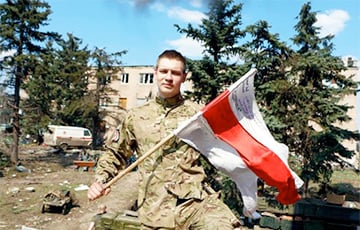
The leading character is a soldier with a nom-de-guerre 'Bilorus'.
He risks his life for free and indivisible Ukraine, he believes his
homeland's fate also depends on it, Belsat TV channel reports.
The
character was born in eastern Belarus. He was on the Maidan and now
participates in military actions close to Donetsk. The Belarusian is
fighting in the volunteer corps "Right Sector" - military unit sold as
the main enemy of Russian citizens. The warrior does not have Ukrainian
citizenship and from a legal standpoint his stay is illegal. He can
expect neither rewards nor pension. "I came to the Maidan because of Mikhail Zhyzneuski's death", he tells.
About
100 Belarusians are warring in the Donbas on the Ukrainian side. What
does motivate young men to pick up a weapon? Film director Anton Tsialezhnikau tells the story. "25
years ago citizens of the USSR did not ask themselves what their
compatriots did during the Civil Wars in Spain, Viet Nam, Egypt or
Afghanistan, he says. It all was covered over with beautiful
words 'international duty'. Nobody still can explain why our nations
used to sacrifice their lives. I think such solidarity for
Belarusians takes place not somewhere in Africa or the Middle East, but
in neighbouring Ukraine. The Kremlin has triggered off another
fratricidal war. In times of Euromaidan tens of Belarusians followed
their hearts. They saw all the injustice in Ukraine, parallels of
Yanukovich's regime and the current one in our country. However, the
Maidan's victory became the reason for war in eastern Ukraine and many
Belarusian patriots could not betray a fraternal nation and even more
people arrived. These people realize that the end of this
war will result in Belarus's future, whether we are the next who will be
swallowed up by 'Russian peace'. By sacrificing their lives, they can
expect mutual solidarity and support of the Ukrainian people ".
The song "Don't give up!" and music are written by Aliaksandr Charkashyn, the composer, Belarusian volunteer-chaplain in Ukraine. The film director met him on the front.
Anton
Tsialezhnikau spent almost 2 months in the ATO zone. He made his
documentary there, as well as a story about volunteer corps of "Right
Sector".
Film director Anton Tsialezhnikau in his films
"Belarusian resistance" (Белорусский резистанс), "Belarus under German
occupation" (Беларусь под немецкой оккупацией), "Playing mock battles"
(Игра в войнушку), "Cursed and Forgotten" (Проклятые и забытые) reveals
Belarusian history's true character. His music videos with a historical
retrospective for a known rock band "Дзяцюкі" – "Forest brothers"
(Лесные братья) and "Guys-Bałachowcy"(Хлопцы-балаховцы) – made him a
fortune. While shooting one music videos the director was arrested with
all his crew and musicians.
Anton Tsialezhnikau was the charter97.org laureate of the National prize for protection of human rights.
The Belarusian politician believes that the stand of
the European Union on human rights situation in Belarus has become more
principled, than pragmatic now.
It was said by the former political prisoner, a co-chairman of the
organizing committee for creation of the Belarusian Christian Democratic
Party Paval Sevyarynets in an interview to charter97.org. -
You have taken part in the meeting of Belarusian opposition’s
representatives with the delegation of the European Parliament. What are
your impressions from communication with the European politicians?
-
The general impression from the meeting is the following: on the one
hand, Europeans want to use the geopolitical situation related to
Ukraine, and detach Belarus and Lukashenka’s regime from Russia. But on
the other hand, they understand that the regime does not want to agree
to any changes, but prefers to follow the Azerbaijani scenario. For
today I have seen that the stand of Europeans is rather principled, than
pragmatic. At least, among the politicians who represent the European
Parliament, there is realization that in case Lukashenka wouldn’t
release political prisoners, any serious easing of some requirements,
and especially recognition of the election, are out of the question.
There are two things that are worrying the politicians from the
delegation of the European Parliament most: release of political
prisoners and the situation with the so-called “election.” These people
do not have illusions, most of them are politicians, who have been
working with Belarusian agenda for a long time. - And what statements have been specifically made by the delegation on the problem of political prisoners in Belarus?
-
At least, Bogdan Zdrojewski, who is the head of the Delegation for
relations with Belarus in the European Parliament, stated that the
position of Europe on political prisoners in Belarus is a fundamental
point. And without their release Lukashenka’s regime cannot count on
serious improvement of relations with the European Union. Besides, the
European politicians have stressed that they hadn’t recognized and would
not recognize the lower chamber of the Belarusian parliament, the
so-called “little chamber, or tent” without holding free election. -
In the run up to the visit the intention of the delegation of the
European Parliament to meet with relatives of the political prisoners
was announced. Have these meetings taken place?
- It’s true,
it was on the programme of the visit. Probably, our meeting, the meeting
of opposition representatives, had been held earlier, as I do not know
anything about the meeting with families of the political prisoners. You
should ask about that the relatives of the political prisoners
directly.
Belarus continues to check the system of tightening control over the state border and territorial defence.
“As part of the check of the system of tightening control over
the state border in the southern direction and territorial defence of
the Homel region, servicemen of the 38th guards separate mobile brigade
made a march accompanied by Mi-8 helicopters, passed to the control of
the command of the Mozyr border squad and began to implement joint tasks
on reinforcing the state border,” the press release says.
A
unit of the 103d separate mobile brigade of the special operations
forces of the Armed Forces marched to the area near the village of
Kastsiukouka in the Homel region. The servicemen practised repelling
attacks of the opposing force. Upon arriving at the destination, the
servicemen passed to the command of the border service, occupied the
position area and began to set up a camp.
The process of the
formation of the territorial defence headquarters and a separate
infantry squadron is continued in the Yelsk district of the Homel
region. “We completed the reception of reserve officers for the
formation of the territorial defence headquarters. It is planned to
acquaint them with their duties, give them weapons and ammunition form
the depot of the Armed Forces,” the Ministry of Defence adds. “The
deployment of the territorial troops is carried out to test the ability
of the Homel regional command to implement required tasks.”
What is the Eastern Partnership Summit
It is a big meeting of the leaders of the Eastern Partnership member
countries with high-rank European officials. The first such summit was
held on 7 May 2009 in Prague - it adopted a joint declaration on the EaP
program and formally approved it. It actually means that the Eastern
Partnership was launched in Prague. Then there were the summits in
Warsaw, Brussels and Vilnius. At the same time Belarus, unlike other
participants, has never been represented by the head of the country -
instead of Lukashenka the country was represented by the MFA head. What's going on there
All kinds of things do. For example, at the Brussels summit in 2012,
participants discussed Belarus. More precisely, they discussed the human
rights situation in our country. It was acknowledged that there is room
for improvement. At the last summit in Vilnius they were supposed to
sign the association agreement between the EU and Ukraine, Georgia and
Moldova. It did not really work well with Ukraine, as everyone knows,
that's why Maidan, Crimea, and the war in Donbass followed. What can happen at the summit in Riga
Basically, nothing serious can happen at the Summit. "There is not
much to be expected. Apart from, maybe, the signing of certain documents
on the visa regime facilitation. And it could happen some time after
the summit," warns political analyst Andrei Yahorau. Moreover, it is not
even about visa price reduction for Belarusians, but rather about the
streamliningn of procedures for diplomats and other VIPs. Thus, ordinary
citizens wll not notice anything except the catchy media headlines. Who will represent Belarus
Here is still a little mystery. The EaP Summit is the place for
geopolitical PR. Since the beginning of the spring, there have
circulated rumors on the sidelines of the Western Ministries about
Lukashenka getting an invitation. The rumor had it that the West could
even turn a blind eye to the fact that Lukashenka is stil on the EU
black list. The Belarusian Foreign Ministry has not disclosed the name
of its representative saying it is too early for that: "Currently, this
information
cannot be disclosed. The name of the Belarus representative at the Riga
summit will be made public as soon as there is a need for it."
The expert Yury Shautsou believes that the invitation and the visit
of Lukashenka to Riga could be another signal to the West - look, we are
in fact neutral and independent. However, Shautsou said that the
Eastern Partnership summit has not really taken serious decisions
before, so "there is little practical significance in the presidential
visit to Riga." Andrei Yahorau believes that the likelihood of this
visit equals zero: "Lukashenka is on the black list. To get him off it,
you need a solution of all the EU countries. This has not been the
case." Why the Eastern Partnership summits make Russia so angry?
the reason could be that Russia was not invited there, and the
participating countries like Georgia, Armenia, Azerbaijan, Moldova,
Ukraine, Belarus has long been perceived by the Kremlin as its sphere of
influence. In addition, one of the ideologists of the EaP was Polish
Foreign Minister Radoslaw Sikorski, and he is the sworn enemy of Kremlin
in the geopolitical field of Europe. In reality we see that the
Kremlin's fears are not entirely baseless - Moscow has lost Ukraine as
an ally if not for ever, then for a very long time.
 They were fined under Part 2 of the Article 22.9 of
the Administrative Code - each of them was fined 35 basic units (6
million 300 thousand rubles), NGO Belarusian Association of Journalists
reports.
They were fined under Part 2 of the Article 22.9 of
the Administrative Code - each of them was fined 35 basic units (6
million 300 thousand rubles), NGO Belarusian Association of Journalists
reports.